How to Build a Memory Palace for Foreign Vocabulary
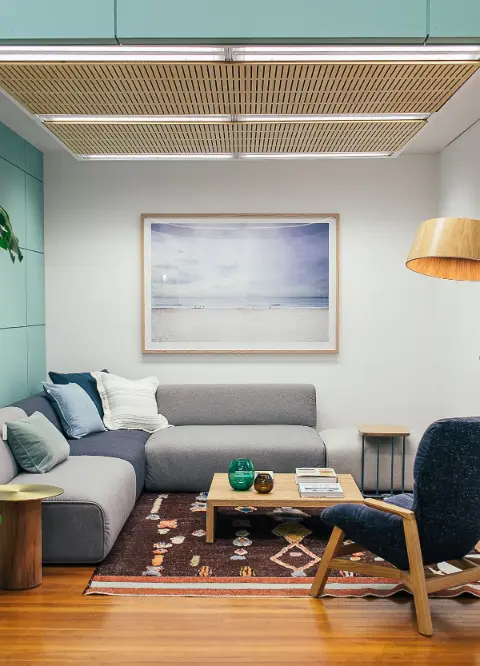
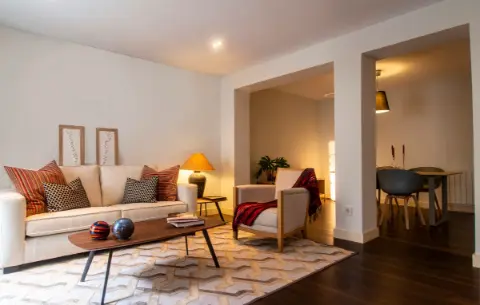
A place you know by heart — like your own living room — makes the perfect first memory palace.
If you can walk through your home in your mind and name every room, you already have everything you need to memorize a hundred foreign words. That's the strange, wonderful promise of the memory palace.
Ancient orators used it to recall hours-long speeches. Today's memory champions use it to memorize decks of cards. And it happens to be perfect for the one thing that trips up most language learners: making vocabulary stick. In this guide you'll build your first palace step by step, with real examples, and learn how to keep the words there for good.
Key takeaways
- A memory palace turns abstract words into vivid images placed along a route you already know.
- Beginners do best with 8–12 words per palace, one at each stop.
- The stranger and more sensory the image, the better it sticks.
- Pair the palace with spaced repetition so words move into long-term memory.
What a memory palace actually is
The memory palace — sometimes called the "method of loci" — is a trick for remembering things by attaching them to places. Instead of trying to memorize a bare word like the Spanish caballo (horse), you imagine a giant horse doing something ridiculous in a specific spot in your kitchen. Later, when you mentally walk into that kitchen, the horse is waiting for you, and the word comes with it.
Why does something so silly work so well? Because human memory evolved for navigation. For most of our history, remembering where the water was or where the dangerous animals lived mattered far more than remembering lists. Your brain has a huge, ancient system for places — and the memory palace hijacks it for vocabulary.
What you'll need
- A place you know very well (your home works best to start).
- A short list of 8–12 words you want to learn.
- Five quiet minutes and a willingness to imagine some very strange scenes.
- Optional: a notebook to jot your route and images while they're fresh.
Step 1: Choose a place you know by heart
Your first palace should be a place you can picture with your eyes closed. Your current home is the natural choice, but a childhood house, your daily commute, or even a favorite park all work. The only rule: you should be able to "walk" it without hesitating about what comes next.
Step 2: Fix a set order of stops
Now walk your chosen place in one consistent direction and pick out distinct "stops," or loci — the front door, the coat hook, the kitchen sink, the fridge, and so on. Aim for 8 to 12 for your first try. Always walk them in the same order, because that order is the thread you'll pull to recall your words later.
Write the stops down once, in order. After a walk or two you won't need the list — the sequence becomes automatic, and that reliability is exactly what you want.
Step 3: Turn each word into a vivid image
This is the creative heart of the method. For each word, you build a mental picture that sounds like the word and shows its meaning. The classic bridge is the keyword technique: find a word or phrase in your own language that sounds like the foreign word, then combine it with the meaning.
Take French pain (bread), pronounced a little like the English word "pan." Picture a hot metal pan with a crusty loaf of bread sizzling inside it. For German Katze (cat), imagine a cat stuck in a giant cot that's too small for it. The odder, funnier, and more sensory the scene, the more it sticks.
You don't memorize the word. You memorize the picture — and the word is stuck to it.
Step 4: Place one image at each stop
Now walk your route and drop one word-image at each stop, in order. Don't just set it down — make it interact with the location. The bread isn't sitting near the front door; the sizzling pan is wedged in the mail slot, dripping onto the doormat. The more your image touches and disturbs the place, the stronger the link.
Go slowly the first time. Spend a few seconds really seeing, hearing, and even smelling each scene before you move to the next stop. That few seconds of attention is what turns a fleeting idea into a memory.
Step 5: Walk the route to review
To recall your words, close your eyes and take the same walk. Each stop hands you its image, and each image hands you its word. The first review might feel effortful; by the third, most words will pop up instantly.
Here's the important part: a memory palace gets words into your head fast, but reviewing keeps them there. Walk your palace again after a few hours, then tomorrow, then in a few days. This is where spaced repetition comes in — space those reviews out and the words move into long-term memory. Many learners encode with a palace, then hand the same words to a flashcard deck for the long haul.
Memory researchers have studied this method for decades; if you want the background, the method of loci has a long, well-documented history behind it.
Frequently asked questions
Yes. The method of loci is one of the oldest and best-studied memory techniques. It works because your brain remembers spatial locations far more easily than abstract sounds, so attaching words to places gives them a hook to hang on.
Most beginners start with 8–12 words per palace, one at each stop. As you get comfortable you can place two or three images at a single location, or build several palaces for different topics.
You can, but let a palace "cool down" for a day or two before reusing it, or the old images can interfere with the new ones. Many learners keep a few palaces in rotation for exactly this reason.
They work best together. Use the palace to encode words quickly, then review them with spaced repetition or flashcards so they settle into long-term memory.
Want a new memory trick every week?
Join the free VocabVaultz newsletter — one practical technique like this, every Sunday. No spam, unsubscribe anytime.
The VocabVaultz team
We're language learners who got tired of forgetting words we'd "already learned." Everything here is a method we've actually tried on our own vocabulary — explained plainly, with the hype left out. More about us →